We are searching for you. Please wait...
EXECUTIVE VOICE SERIES

An Interview With Wylinka’s Founder Ana Carolina Calçado

Wylinka: Getting Brazil’s Science Out of the Lab and Into the Market

Ana Carolina Calçado founded Wylinka in 2013 to bring Brazilian science closer to the market. Thirteen years on, she explains why so little research still becomes innovation, how Wylinka gets universities, companies, government and funders to understand one another, and why, in the age of AI, she is not trying to preserve Wylinka’s model as it is.

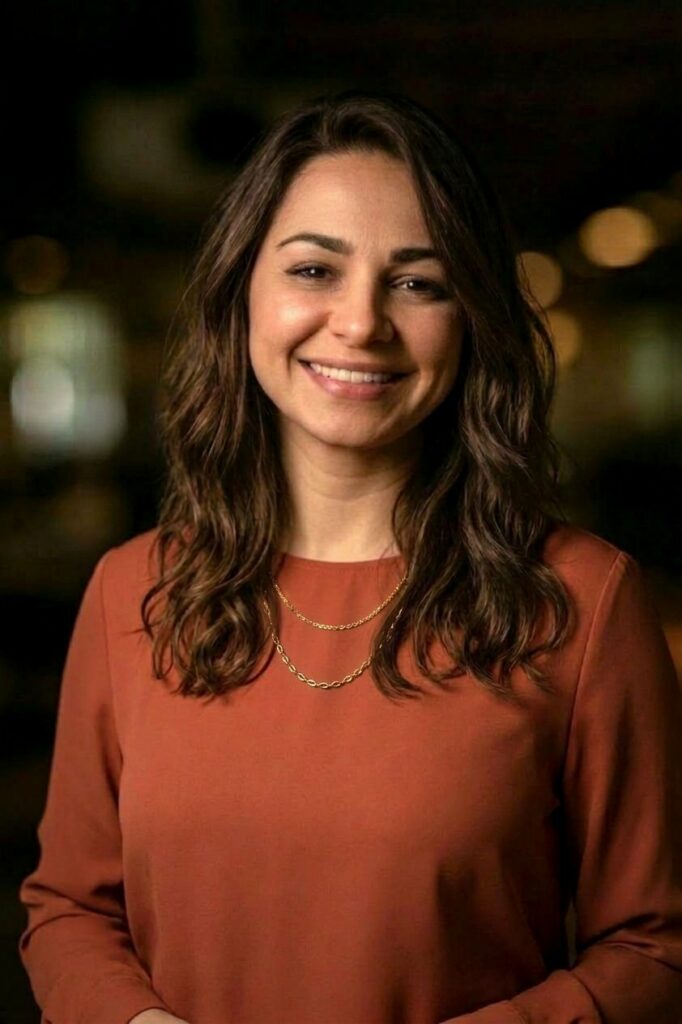
Ana Carolina Calçado, founder of Wylinka
Ana Carolina Calçado, Founder, Wylinka. © Diogo Kenai
Interview by thedotgood’s editorial desk
Share
Ana Carolina Calçado at the 2026 Brazilian Deep Tech Forum, organized by Wylinka. © Diogo Kenai

Brazil produces a significant share of the world’s scientific research, yet only about 12% of the patents filed by Brazilian universities become commercial products, according to Brazil’s patent office (INPI). After 13 years, why does that gap persist, and has it narrowed?

I think it’s important to remember that Brazil’s Innovation Law dates back to 2004. So we’re talking about just over 20 years of building an environment in which science can become innovation. We now have a relatively robust legal framework, but that alone doesn’t solve the problem.

There’s a major cultural shift that still needs to happen across universities, research institutions, government and regulatory agencies. In countries where the connection is more mature, entrepreneurship and proximity to industry are already part of the culture of scientific institutions. And that takes time to build.

I do believe we’re making progress. Scientific output and patent filings have grown, and indicators in the Global Innovation Index show improvements for Brazil in research, patents, and knowledge and technology outputs.

I also see important government initiatives, such as Nova Indústria Brasil and EcoInvest, that could accelerate this process.

But we need to remember that we’re talking about innovation with long development cycles. Many of the changes we’re making today may only translate into products and solutions in 10 or 20 years. So I believe we’re creating the conditions to narrow the gap, even if the results aren’t yet that visible in the market.

Wylinka works across universities, businesses, government and funders, which speak different languages. Where does that translation most often break down, and what have you learned to do about it?

I think the translation often breaks down in the language itself, and in how each of these actors sees innovation. Universities tend to focus on the technology, businesses on its application, and government on regulation. It’s as though each person is looking at a different part of the same elephant without being able to see the whole picture.

What we’ve learned at Wylinka is something very simple in theory, but not always in practice: get everyone into the same room and turn on the light.

That’s what we do, for example, through the Policy Labs at the Brazilian Deep Tech Forum. We bring together different actors from the same region to identify their main challenges and develop solutions together. It takes people out of their everyday routines and creates space to explore new ways of collaborating.

But there’s also an important job of translating between those perspectives. That means helping scientists understand the market better and helping different actors understand one another’s needs and language.

So it’s not just about introducing people. Our job is to create the conditions for them to understand each other, align their interests and actually work together.

How do you prevent funders’ priorities from setting Wylinka’s agenda? Have you ever turned down funding for that reason?

Actually, I wouldn’t say that we need to prevent funders from setting our agenda. What happens is that we connect with funders who already share the agenda we want to advance.

Our partners become funders precisely because that alignment exists. By the time we’re designing projects, making plans and developing initiatives together, we usually have a very similar view of the challenges we want to address and the changes we hope to bring about.

That doesn’t mean every opportunity makes sense. We have decided not to pursue proposals that weren’t aligned with Wylinka’s mission or values.

There’s another important consideration for us: we don’t want to compete with the very actors in the ecosystem we’re trying to strengthen. Sometimes an opportunity to generate revenue comes along, but we feel that the work should be done by another organization that already plays that role.

So, for us, it’s less about shielding our agenda from funders and more about building partnerships with people who share our goals, while staying clear about what does — and doesn’t — make sense for our mission.

What we’ve learned at Wylinka is something very simple in theory, but not always in practice: get everyone into the same room and turn on the light.

Deep-tech ventures can take a decade to show results, while funders expect results within shorter grant cycles. What do you report in the meantime?

That difference in timing is a real issue, and one tool that helps us deal with it is our Theory of Change.

We start with the impact we want to achieve and map out a chain of short-, medium- and long-term outcomes. That helps us understand how what we do today contributes to the change we ultimately want to see.

For example, we want to help create more skilled, higher-value jobs. When we train undergraduate, master’s and doctoral students to think more entrepreneurially and innovatively, we’re broadening their professional opportunities. They may find better jobs, bring innovation into industry, or start technology-based businesses that also create skilled jobs.

Wylinka has already trained more than 12,000 people, and that number matters to us because we understand the role that training plays in the broader chain of change we’re trying to create.

So we don’t need to wait 10 years to assess whether we’re moving in the right direction. Our Theory of Change helps us understand what today’s results mean for the impact we want to achieve over the long term.

With a team of around 24 people, what capabilities have you had to build that you didn’t anticipate when you started in 2013?

When I founded Wylinka in 2013, I knew I wanted to foster more science-based innovation and bring science closer to the market. I was very focused on what the organization would actually do.

What I hadn’t imagined was the entire structure we would need to build to keep doing that better and, above all, to earn trust.

Today, for example, we have a very solid administrative structure. We work with different kinds of funding, including public resources, which require great care in how funds are used, monitored and accounted for. But that responsibility applies regardless of where the funding comes from. We need to show all our partners that we use resources responsibly, transparently and efficiently.

Over the years, we’ve developed administrative and management capabilities far beyond anything I could have imagined at the beginning.

I think when you start an organization, you focus on what you want to deliver. Over time, you realize that you also have to build an entire institutional structure to sustain that work, keep improving it and earn the trust of the people and institutions you work with.

How big will the transformation brought by AI be for Wylinka’s field, and how are you measuring it?

Well, I think we’re in the same position as many other sectors. We know a lot is changing, but we’re still right in the middle of the whirlwind.

I’m not sure we can fully imagine what things will look like when artificial intelligence is much more widely integrated into research, innovation and the development of new businesses.

I do believe this will be a very big change. But it’s hard to say we already understand its full scale.

And it wouldn’t be true to say we’re measuring that transformation. What we’re doing is following what’s happening and trying to understand the opportunities this technology creates for Wylinka’s work and, more importantly, for our mission.

We’re looking at how AI can improve processes, speed up activities and increase our ability to create impact.

I think we’re still discovering just how far those possibilities go. Right now, rather than trying to predict exactly what the future will look like, what matters most is keeping up with the changes and making use of whatever can help us turn more science into innovation.

AI can increasingly perform tasks that are part of Wylinka’s services. Does that weaken or strengthen your model? What are you changing, and what have you decided to preserve?

Wylinka is much more grounded in the change we want to bring about than in the things we do. We often say that what we do depends on what needs to be done for that change to happen.

Someone in the nonprofit sector whom I respect a great deal once told me that every cause-driven organization’s utopia should be to die. Because if you exist to solve a problem, your greatest wish should be for that problem to cease to exist.

I find that incredibly powerful, because it makes us question what we get attached to.

So when I look at AI, I mainly see opportunities to accelerate and scale our impact. If it can do something better than we currently do, great! We can focus our efforts on what still hasn’t been solved. That’s what we’ve tried to do for 13 years.

We’re exploring how to use AI to do more, do it better and use fewer resources, while of course taking the necessary precautions to protect information.

As for what we’re deliberately choosing not to change, I don’t have an answer yet. We’re figuring that out as we go.

My concern isn’t to preserve our business model as it is. It’s to adapt so we can keep creating impact.
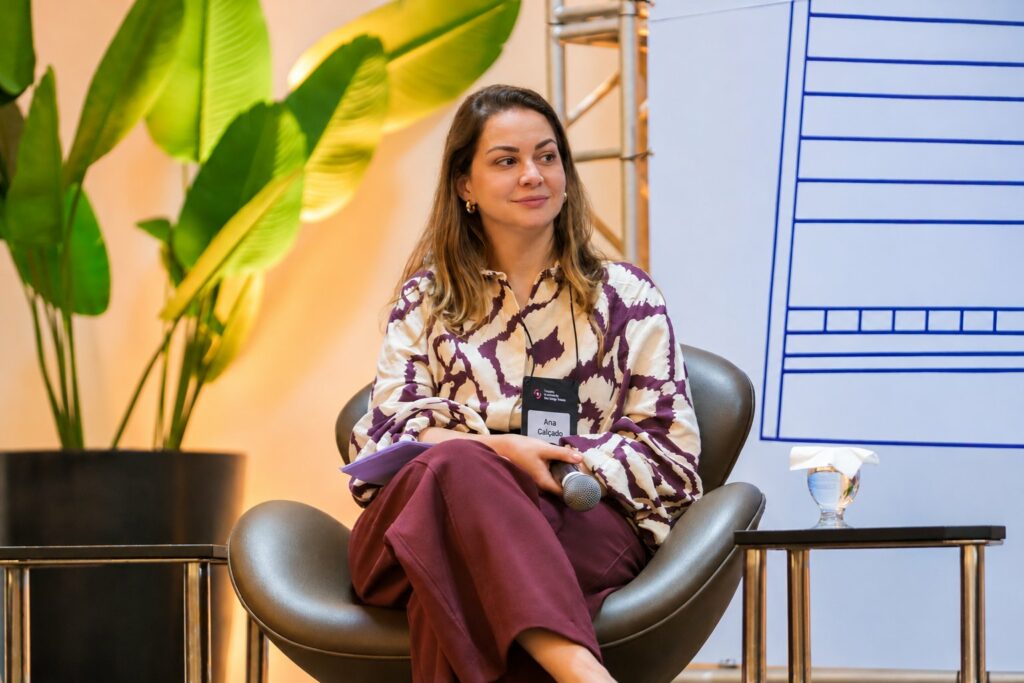
Ana Carolina Calçado, founder of Wylinka, seated on a panel at the Brazilian Deep Tech Forum
Ana Carolina Calçado on a panel at the Brazilian Deep Tech Forum. © Diogo Kenai

Will AI help Brazilian science reach the market faster, or widen the gap with countries that have more resources? What does Brazil need to do?

That’s the million-dollar question!

I’m certain AI will help Brazilian science reach the market faster. What I don’t know is whether we’ll move as quickly as we need to, or at the same pace as other countries.

Historically, given our size and complexity, Brazil hasn’t always been quick to adopt change. I think we really need to pay attention to that.

At the same time, I’ve seen developments that encourage me. In the Policy Labs of the Brazilian Deep Tech Forum, which we held in five regions, one of the main challenges identified was ecosystem governance.

I would highlight two things here: bringing actors together and setting a strategic direction for the country.

I think initiatives such as Nova Indústria Brasil matter because they establish priorities and help direct efforts. Instruments such as EcoInvest are also interesting because they mobilize capital and encourage different actors to work together.

For me, that combination is essential: knowing where we want to go and creating the conditions for different players to move in that direction.

That could help Brazil make better use of this transformation, moving faster and in the right direction.

How do you change enough to remain relevant without losing clarity about what should never change? For Wylinka, what should never change?

For me, what must never change is very clear.

Wylinka was founded as a nonprofit precisely because its reason for existing is its mission: to turn science into innovation that improves people’s lives and drives Brazil forward. If that changes, Wylinka is no longer Wylinka. I could create something else, but it wouldn’t be the same organization.

There’s a second dimension too: our values. Valuing people, acting with purpose, seeking deep knowledge in what we do, and being transparent are principles I believe in personally and bring into the organization.

So, to me, the question isn’t so much what we must not change, but what we need to change to fulfill our mission better.

When we do strategic planning or consider an opportunity, that’s what we ask ourselves: how can we create more impact?

And the answer keeps changing, because the world keeps changing. In fact, if we’re doing our job well, Brazil’s innovation ecosystem will be evolving too. Some challenges will be overcome, new needs will emerge, and Wylinka will need to keep adapting to respond to them.

If we speak again in five years, what result would tell you Wylinka has succeeded?

I hope I’ll be able to tell you that we’ve trained many more people, supported many more businesses and institutions, and helped bring together important initiatives for Brazil. But above all, I hope we’ll be seeing the results of all that work.

I want to see more technology-based companies being created, more skilled jobs, more technologies developed, and a Brazilian industry that is more productive and innovative.

I want to see Brazil move beyond its historical position as a major exporter of commodities, developing and exporting more higher-value products and services.

And I want those changes to reach people’s everyday lives: more and better food, greater productivity in agriculture, new solutions for healthcare, technologies that help reduce CO₂ emissions, and so many other products and services that improve quality of life.

Because, in the end, training people, supporting businesses and connecting institutions are means to an end. What I really want to see in five years is more Brazilian scientific knowledge turning into innovation that improves people’s lives and helps the country move forward.

Wylinka is No. 12 in thedotgood’s 2026 Brazil Top 100 and No. 137 in its World 200. Read Wylinka’s profile on thedotgood → Visit Wylinka at wylinka.org.br.

Share

Related articles