We are searching for you. Please wait...
EXECUTIVE VOICE SERIES

An Interview With ChildFund Brasil’s Executive Director Mauricio Cunha

What It Really Costs to Change a Child’s Life in Brazil

Mauricio Cunha, Executive Director of ChildFund Brasil, explains why the lowest overhead rarely means the greatest impact, how Brazilian sponsorship is changing, and what he would protect first if public budgets tighten.

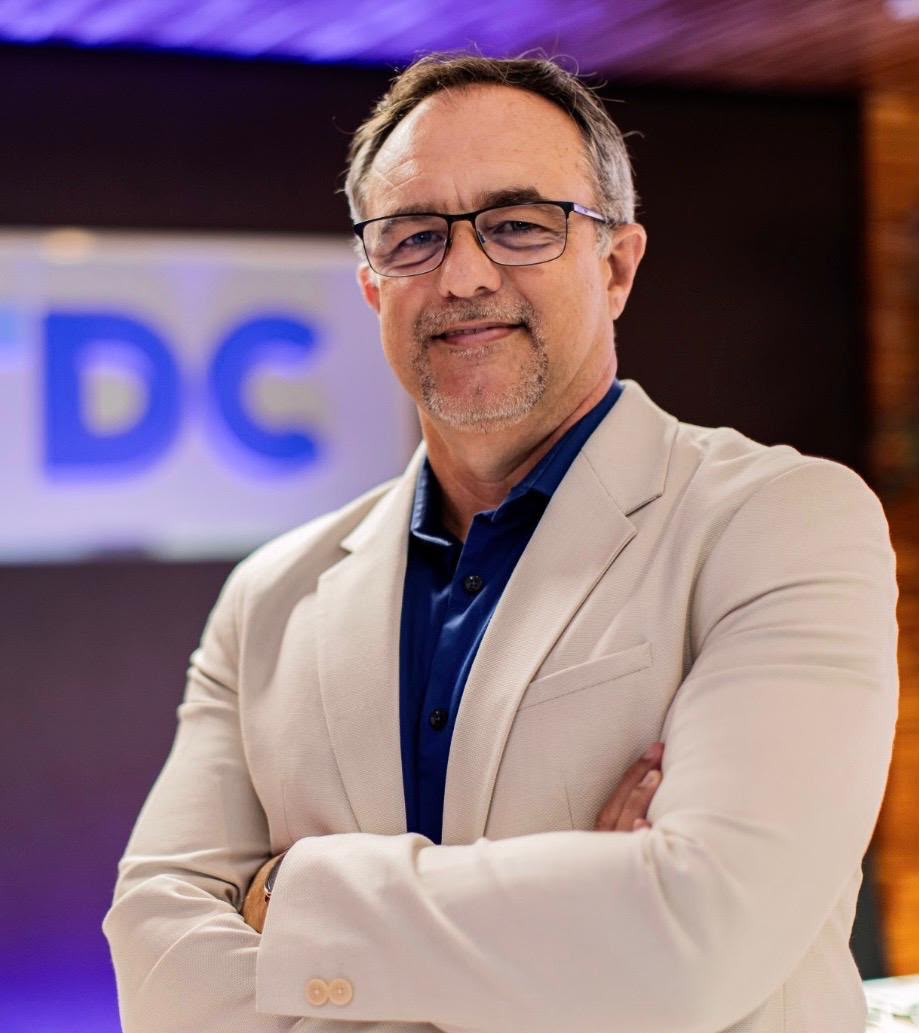
Mauricio Cunha, Executive Director, ChildFund Brasil
Interview by thedotgood’s editorial desk
Share
A ChildFund Brasil program. Photo: Jake Lyell / ChildFund

ChildFund Brasil has worked with children and families in Brazil for decades, as part of the global ChildFund network. What does it do today that it did not do ten years ago, and what has it stopped doing?

ChildFund Brasil’s work has always evolved with the country and, above all, with the priorities and aspirations of the communities we serve. Ten years ago, our approach focused on urgent needs and access to basic services. Reducing vulnerability remains essential, but our ambition today goes much further.

We now help children, families, and communities become more autonomous and take the lead in their own development. Rather than treating the consequences of poverty, we want to tackle its root causes and create the conditions for lasting change.

Innovation has also transformed how we work. We are taking our social technologies, the methods we apply with communities, into the digital world, and confronting threats that were far less visible a decade ago, such as the online abuse and exploitation of children and adolescents.

Finally, we have strengthened our results-based management. Indicators and evidence now show the social impact of our programs much more clearly, which lets us learn, adapt, and keep improving.

Child sponsorship is at the heart of ChildFund’s model. How has the relationship between Brazilian sponsors and the children and communities they support changed, and what does a sponsor actually receive today?

Thousands of Brazilians still believe in our cause and take a child under their wing, opening up opportunities and hope for that girl or boy. Yet sponsorship goes far beyond financial support. At its heart, it creates a genuine bond between two people, one that can enrich both lives.

In Brazil, we speak of apadrinhamento: the sponsor is a padrinho or madrinha, a godparent, and the child an afilhado or afilhada, a godchild. The words say something about the bond we hope for: more than a donation, a lasting relationship.

Sponsors can follow the child’s development over the years. They exchange letters, send gifts, receive regular news from the community, and some even travel to meet their godchild, on visits that ChildFund organizes with great care.

This one-to-one relationship is one of the great strengths of our model. It lets donors see the human side of their contribution and feel part of a longer journey of transformation, which helps explain why many stay with us for years. Ultimately, it brings together people who would otherwise never have met, united by the chance to change a child’s future.

About two-thirds of ChildFund Brasil’s donations come from abroad, through the ChildFund network, and the number of children sponsored by donors outside Brazil fell in 2025. How do you see that balance evolving, and is a larger Brazilian share a goal in itself? Bills now before Congress, such as PL 1659/2024, would restrict or condition foreign funding of Brazilian civil society organizations: how could they affect ChildFund Brasil?

The balance is already shifting: according to our latest figures, almost half of ChildFund Brasil’s total revenue is now raised in Brazil. The decline in international sponsorship is not new. We have watched it for several years, in the United States as well as in Europe.

We want the Brazilian share to keep growing, while foreign funding remains vital to our mission. Our record of proven impact, integrity, transparency, strong governance, and excellent programs should allow us to expand domestic fundraising significantly in the coming years.

PL 1659/2024 is still before Congress. We hope the final law will preserve legitimate international cooperation. Restrictions that sharply limit access to money from abroad would have serious consequences for Brazilian civil society and, in the end, for the vulnerable children, families, and communities who depend on its work.

Efficiency and accountability are essential, but the lowest overhead does not necessarily mean the greatest impact.

ChildFund Brasil was among the ten fastest of 33 leading Brazilian organizations in thedotgood’s first info-biorhythm benchmark: it made its audited statements and annual report public soon after year-end. Why does publishing early matter to you, and who notices?

Transparency is fundamental to us. Publishing our audited financial statements and our Sustainability Report promptly is not simply a matter of compliance. It is about accountability: showing our donors, partners, communities, Board, employees, and the wider public that ChildFund Brasil deserves their trust.

We were honored by thedotgood’s recognition, which was warmly celebrated across the ChildFund International network. It confirmed a commitment built steadily over many years.

Since 2015, our Sustainability Report has followed the standards of the Global Reporting Initiative (GRI). We see it as more than an institutional publication: it is how we account for our results, our impact, our governance, and the way we use resources. Over the years, we believe it has become a reference well beyond the nonprofit sector.

Credibility is built through consistent action. Releasing high-quality information quickly is one such action, and we intend to hold to it in the years ahead.

What do funders and donors most often misunderstand about what it costs to deliver lasting results for children?

A common misunderstanding is that maximizing results means directing almost all funding to frontline activities. In reality, lasting outcomes for vulnerable children and families also require strong, well-run organizations behind the programs.

Quality delivery depends on skilled teams, safeguarding, monitoring and evaluation, technology, financial controls, governance, and operational capacity. Projects that fail to fund this core infrastructure may actually increase implementation risks and gradually weaken the very organizations expected to do the work.

Funders also tend to underestimate how complex social development is. Poverty is multidimensional; the problems children face never have a single cause or a quick fix. Real change means working over time with families, communities, local organizations, public systems, and other stakeholders.

That is why we believe so strongly in multi-year investment and systemic approaches. Efficiency and accountability are essential, but the lowest overhead does not necessarily mean the greatest impact. What matters is the quality, durability, and long-term value of what we achieve for children.

How do you assess that a child’s life has changed because of ChildFund Brasil’s work? Give one result you are proud of, and one indicator that disappointed you and what you changed as a result.

Our monitoring systems regularly track changes in the lives of children, adolescents, and their families, using measures tailored to the social technologies applied in each community. But behind every indicator is a real person with a story of their own.

Jean is one example I am particularly proud of. He grew up in a highly vulnerable quilombola community in rural Brazil, one of the settlements founded by people who escaped slavery and still home to their descendants. His years with ChildFund opened a new perspective on what his future could be. Today, on a scholarship, he studies political science at Northwestern University in the United States.

Davidson is another. He now sits on the Adolescent Participation Committee (CPA) of CONANDA, Brazil’s National Council for the Rights of Children and Adolescents, where he brings the voice of young people to national debates and policymaking on their rights.

Not every indicator moves as we would like. Basic learning outcomes, especially in Portuguese and mathematics, remain difficult, because they depend heavily on structural problems in Brazil’s education system. That taught us an important lesson: lasting impact requires going beyond individual interventions, toward partnerships and systemic approaches that address the wider environment in which children learn and grow.

Which partnership (public, private or with communities) has done the most for ChildFund Brasil’s results in recent years, and why did it work?

I could name many, but two recent partnerships with private funders stand out for their results.

With the LEGO Foundation, we ran Brinca e Aprende Comigo (Play and Learn with Me), which reached thousands of Brazilian families with positive parenting, discipline without physical punishment, and family play, all of which strengthen relationships and prevent violence against children. The project also supported our advocacy for a federal law that reinforces children’s right to play and to a safe upbringing. Its benefits could therefore reach millions of children, far beyond the communities we served directly.

With ADM in Maranhão, one of Brazil’s most socially vulnerable states, we combined environmental education, disaster-risk reduction, and food security in public schools, bringing real change to the school communities involved. A second phase is now under way in more schools, and the model is being extended to Argentina.

Both worked because they went beyond the usual funder–contractor relationship. They became true institutional partnerships, built on shared purpose, trust, technical quality, and excellent execution.
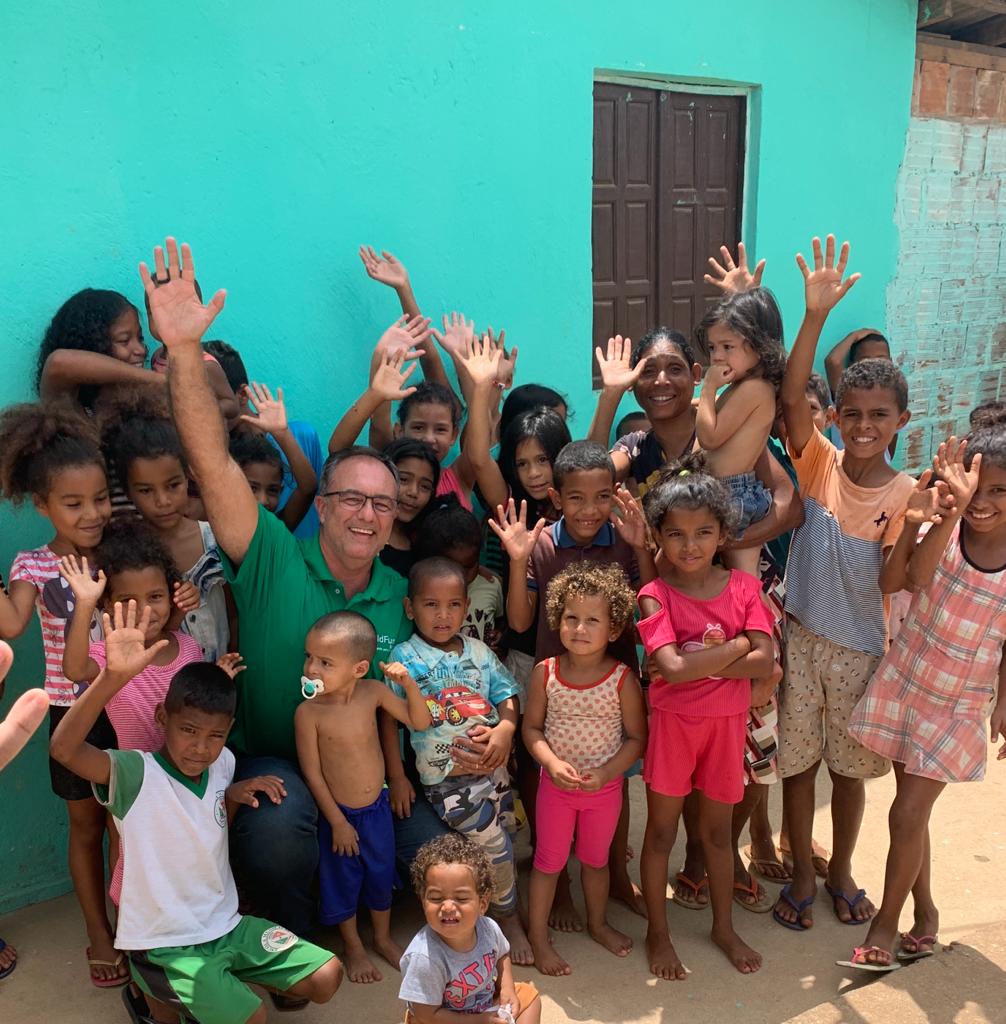
Mauricio Cunha with children in a community supported by ChildFund Brasil. Photo: ChildFund Brasil

President Lula has just won a fourth term, and, as the Financial Times put it on Oct. 27, the government may now face a fiscal reckoning after Brazil’s market rout. If public budgets tighten, which policy for children and adolescents would you most want protected, and what can organizations such as ChildFund Brasil do, or not do, to fill the gaps?

Most realistic forecasts point to a difficult fiscal and economic climate. The sharp market reaction to President Lula’s victory reflects those concerns, and social policies and public investment may come under added pressure.

If one area must be protected, it is the prevention of, and response to, every form of violence against children and adolescents: physical, psychological, sexual, and institutional, offline and online. The digital world has created new risks and amplified old ones, and in some respects we have lost ground in protecting children in recent years.

ChildFund Brasil has one advantage: its programs and projects do not depend on government funding. That gives us a degree of independence and resilience, so we can keep serving communities when state budgets tighten.

Still, civil society cannot and should not replace the state. We can develop innovative solutions, strengthen community protection systems, provide evidence, advocate for effective policies, and serve people that public services struggle to reach. But only government can guarantee universal coverage, sound regulation, and robust public systems at the scale Brazil requires.

Artificial intelligence is reaching schools, families and organizations such as ChildFund Brasil. Where could it help the children ChildFund Brasil serves, and where do you see risks?

I don’t see artificial intelligence and the human dimension as opposites. If technology is to contribute to a better society, the two must reinforce each other. AI can widen access to knowledge, support more personalized learning, help detect vulnerabilities earlier, and give organizations better tools to understand needs and measure impact.

At ChildFund Brasil, we have launched an innovation and AI initiative to make our internal processes more efficient and improve how we engage with donors, partners, communities, and other stakeholders. The aim is not to replace people but to free them for what requires empathy, relationships, judgment, and creativity.

At the same time, we must be very aware of the risks AI poses for children: privacy violations, misinformation, harmful content, exploitation, and new forms of online abuse. Protecting children on the internet has been a global ChildFund priority for years, and AI makes it even more urgent. We will keep strengthening this work so that technology develops as a force for opportunity, with children’s rights and safety at its center.

In five years, what result would tell you that ChildFund Brasil has succeeded?

We have set a “2030 Ambition” built around ten strategic indicators of impact and sustainability. By 2030, we want to have made a lasting difference for one million children, adolescents, young people, families, and community members, helping create the conditions for children to grow up healthy, educated, skilled, and safe.

As we expand, we want to keep our programs excellent, strengthen the protection of children and adolescents, and make sure their voices are heard and that they take a real part in the decisions that affect their lives.

We also want to become a stronger, more resilient organization, with increasingly diverse and recurring funding and a clear position as a reference in child development and safeguarding in Brazil.

So if, in five years, we have gained scale without compromising quality, deepened our impact for children, and built an organization able to carry that impact forward, I will count that as a real success.

ChildFund Brasil is No. 16 in thedotgood’s 2026 Brazil Top 100 and No. 188 in its World 200. Read ChildFund Brasil’s profile on thedotgood → Visit ChildFund Brasil at childfundbrasil.org.br.

Leia esta entrevista em português →

Share

Related articles