We are searching for you. Please wait...
Number of employeeS

6,342

Year of Registration

1956

Number of Followers

0

Annual income

EUR 462.37 million (FY2025)

Category of SGO

Non-profit

Country

Denmark

Secretary General

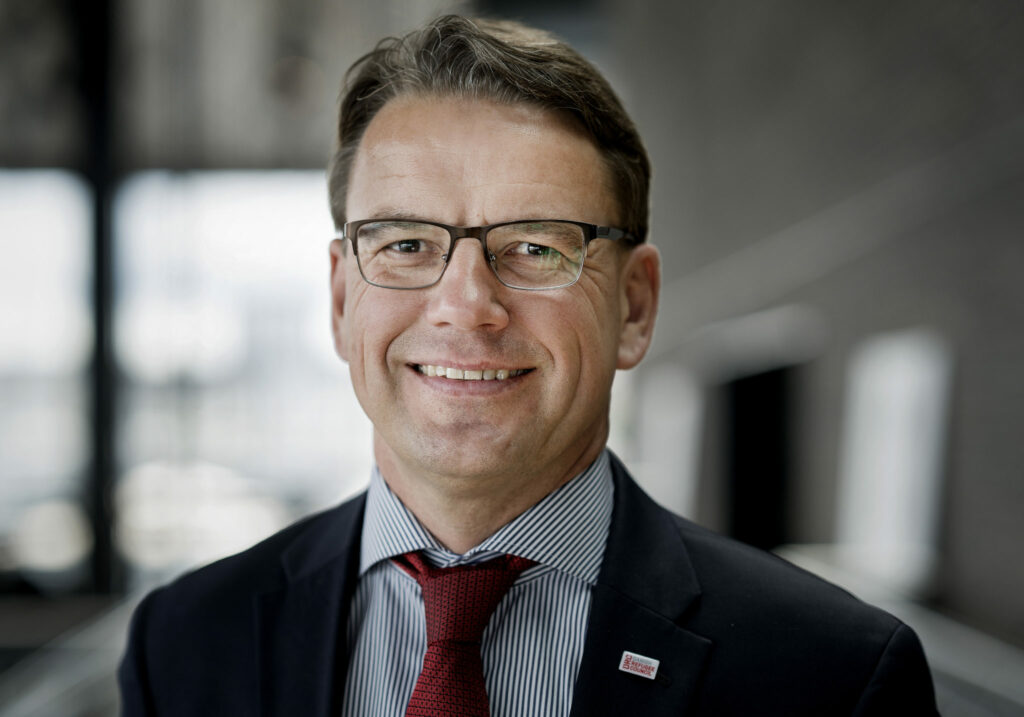
Christian Friis Bach, Danish Refugee Council’s [former] Top Executive Reflects on Digitization and Its Impact on Operations

“We Took a Big Leap Forward to Integrate Digitalization: It Will Make a Difference to People in Need”

By The [.] Newsroom From thedotgood's Editorial Desk
January 30, 2019
thedotgood's take
What's so special with that SGO.
ngo advisor visual effects rond orange

Danish Refugee Council: Forecasting displacement to act before people flee

Founded in 1956, the Danish Refugee Council (DRC) is Denmark’s largest humanitarian organization and a leading international agency for refugees and displaced people. It is an umbrella body whose members range from trade unions and employers’ organizations to NGOs and faith communities, and it is led by its secretary general, Charlotte Slente.

It works across the whole displacement journey: emergency aid and protection when crises break, then legal aid, livelihoods, shelter, mine clearance and support toward lasting solutions, and asylum counseling and integration in Denmark itself. It is funded mainly by governments and international institutions such as the European Union and the UN. In 2025, deep U.S. funding cuts forced it to close several country operations.

What deserves credit is foresight, in the literal sense. DRC’s own model forecasts how...

Read more

Danish Refugee Council: Forecasting displacement to act before people flee

Founded in 1956, the Danish Refugee Council (DRC) is Denmark’s largest humanitarian organization and a leading international agency for refugees and displaced people. It is an umbrella body whose members range from trade unions and employers’ organizations to NGOs and faith communities, and it is led by its secretary general, Charlotte Slente.

It works across the whole displacement journey: emergency aid and protection when crises break, then legal aid, livelihoods, shelter, mine clearance and support toward lasting solutions, and asylum counseling and integration in Denmark itself. It is funded mainly by governments and international institutions such as the European Union and the UN. In 2025, deep U.S. funding cuts forced it to close several country operations.

What deserves credit is foresight, in the literal sense. DRC’s own model forecasts how many people will be displaced from a country, and it uses such forecasts to act before crises peak. It is also candid about its limits: reviewing its last strategy, it wrote that it must move beyond counting activities to measuring what changes for the people it serves.

Show less
Mission statement
ngo advisor visual effects rond orange

“The Danish Refugee Council is a private independent organization whose aim is to protect refugees and internally displaced persons from persecution and promote lasting solutions to refugee problems on the basis of humanitarian principles and human rights.” (DRC statutes section 2.1)

DRC National level:

  • Legal counselling to asylum seekers
  • Safeguarding the rights of refugees and a decent asylum treatment
  • Advocacy and voicing our opinions e.g. on new legislation
  • Integration of refugees and immigrants
  • Our 8.000 active volunteers help refugees find foothold in Denmark
  • Counselling regarding voluntary repatriation

DRC International:

  • In acute crisis we save lives and alleviate the immediate suffering
  • In displacement we promote people’s rights to protection and strengthen their livelihoods
  • We promote durable solutions to displacement
  • We strengthen local capacities and advocate for rights
  • We create environments free from threats of landmines, unexploded ordnance and...
Read more

“The Danish Refugee Council is a private independent organization whose aim is to protect refugees and internally displaced persons from persecution and promote lasting solutions to refugee problems on the basis of humanitarian principles and human rights.” (DRC statutes section 2.1)

DRC National level:

  • Legal counselling to asylum seekers
  • Safeguarding the rights of refugees and a decent asylum treatment
  • Advocacy and voicing our opinions e.g. on new legislation
  • Integration of refugees and immigrants
  • Our 8.000 active volunteers help refugees find foothold in Denmark
  • Counselling regarding voluntary repatriation

DRC International:

  • In acute crisis we save lives and alleviate the immediate suffering
  • In displacement we promote people’s rights to protection and strengthen their livelihoods
  • We promote durable solutions to displacement
  • We strengthen local capacities and advocate for rights
  • We create environments free from threats of landmines, unexploded ordnance and small arms & light weapons
  • We second trained specialists to UN organizations from our emergency Roster

DRC – full circle of displacement:

Danish Refugee Council is unique in assisting refugees and displaced along every phase of the displacement axes. Even though the displacement patterns differ individually, the same displaced could in principle meet DRC in all stages of displacement.

A Syrian internally displaced from the present crisis would receive emergency relief inside Syria, then shelter and cash relief as a refugee in Lebanon, then protection in transit in Greece and Serbia, then benefit of our European advocacy efforts at EU level, then through legal advice in Denmark during the asylum process, then through the support to integrate in Denmark, then through counselling if at some point, there is a stable situation, wishing to return and finally in the form of livelihood and long-term solutions once back in Syria – in addition to the ability to live in an environment no longer contaminated with mines and unexploded ordnance, cleared by DDG.

It goes without saying that we at the same time need to remember that more than 90 percent of the world’s displaced are being hosted in the region of origin. Often some of the most poor and fragile states. That’s why DRC always work with a holistic approach in our responses – and why more than 80 percent of our work are globally.

See more about our Response Framework in section 04 in The International Humanitarian work of the Danish Refugee Council – https://drc.ngo/media/3472097/6-drc-introductory-folder.pdf

As a private humanitarian organisation, DRC’s work covers all aspects of refugee issues based on humanitarian principles and human rights. Our overarching mission is to assist and protect refugees and to empower them towards a better future.

We strive to provide sustainable solutions for refugees, displaced people and host communities coupled with the objective of enabling those we assist to live dignified lives.

DRC’s Mission:

We assist refugees and the displaced, protect their rights and empower them towards a better future

DRC’s Vision:

A dignified life for all displaced

Show less

Impact

LATEST ANNUAL INCOME
EUR 462.37 million (FY2025)
Previous Annual Income
EUR 492.16 million (FY2024)
Latest Surplus/Deficit
(EUR 6.23 million) (FY2025)
Latest Net Assets
EUR 44.65 million (FY2025)
Name of Auditing Firm

Deloitte Statsautoriseret Revisionspartnerselskab (FY2025, unqualified opinion)

LATEST FINANCIAL STATEMENTS

Figures are shown in US$ or EUR. When an organization reports in another currency, DOT converts it using European Central Bank reference rates: the fiscal-year average for income and surplus or deficit, and the fiscal year-end rate (usually Dec. 31) for net assets.

ngo advisor visual effects rond orange
COUNTRY (OR COUNTRIES) WHERE ACTIVE
Afghanistan, Algeria, Burkina Faso, Cameroon, Central African Republic and more
Latest ANNUAL REPORT
TAX YEAR END
December 31

Governance

ngo advisor visual effects rond orange
Secretary General
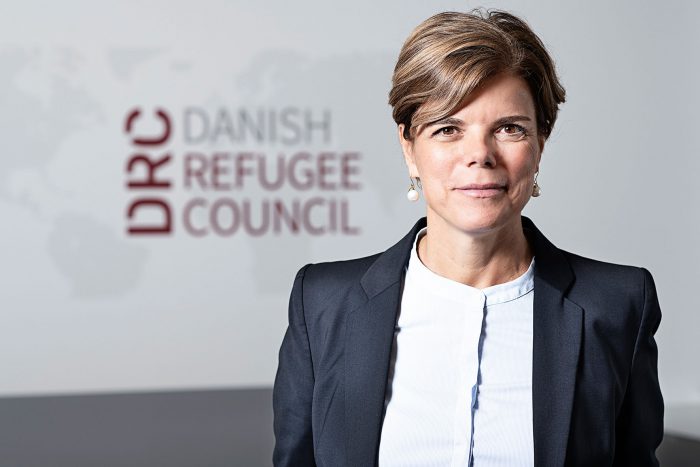
Charlotte Slente
SHORT BIOGRAPHY
Ms Charlotte Slente is appointed Secretary General of the Danish Refugee Council as of December 1st, 2019. Ms Slente comes from a long career in the Royal Danish Ministry of Foreign Affairs and has held multiple senior management posts central to Denmark’s development and humanitarian policy, hereunder State Secretary for Development Policy and Under-Secretary of State for Global Development – heading the Danish International Development Agency DANIDA. Charlotte Slente has also served high-level diplomatic posts, including UnderSecretary of State for Global Politics and Security, as well as Under-Secretary of State for Consular Affairs. Ms Slente has been Ambassador for Fragile States, as well as Economic Diplomacy and held several senior posts at Denmark’s bilateral Embassies. Ms Slente started her career with UNDP and holds a Master of Science in International Business Administration and Modern Languages from the Copenhagen Business School. Charlotte Slente was born in 1966 and is married to Alberto, with whom she has two grown-up sons.
Has Held position since
2022
Board Gender balance
5 female and 2 female
Number of Employees
6,342
Number of Volunteers
7500

History

In November 1956, the Danish Ministry for Foreign Affairs, asked a number of Danish organizations to come together to help the 1,000 Hungarian refugees, from the aftermath of the Hungarian Uprising. The Danish Refugee Council was born as an umbrella organization of nine member organizations. It was thought as a temporary creation, but this was unfortunately not how it went.

During the 1960’s, 70’s and 1980’s, the Danish Refugee Council was responsible for welcoming refugees into Danish society. Among other things, the organization coordinated a range of volunteers and did language courses – which it continues to do to this date. Since the early 1980’s, DRC has been offering counselling to asylum seekers in Denmark Additionally the organization has through its history done collections aimed at collecting funds for helping the world’s refugees.

The Danish Refugee Council began its international...

Read more

In November 1956, the Danish Ministry for Foreign Affairs, asked a number of Danish organizations to come together to help the 1,000 Hungarian refugees, from the aftermath of the Hungarian Uprising. The Danish Refugee Council was born as an umbrella organization of nine member organizations. It was thought as a temporary creation, but this was unfortunately not how it went.

During the 1960’s, 70’s and 1980’s, the Danish Refugee Council was responsible for welcoming refugees into Danish society. Among other things, the organization coordinated a range of volunteers and did language courses – which it continues to do to this date. Since the early 1980’s, DRC has been offering counselling to asylum seekers in Denmark Additionally the organization has through its history done collections aimed at collecting funds for helping the world’s refugees.

The Danish Refugee Council began its international operations in the early 1990’s when civil war broke out in Yugoslavia. From 1992 and on, Danish drivers conducted hundreds of emergency assistance convoys to Bosnia and later in Kosovo. DRC was at a time responsible for half of all the aid to the conflict-affected persons and established a number of long-term projects for the many displaced people.

In 1997, the Danish Demining Group (DDG) was founded as a collaboration between DRC and a number of other organizations to clear unexploded ordnance and mines. A couple of years later, DDG became an integral part of the Danish Refugee Council. Since then, DDG has cleared mines and other munitions in a number of countries and is today also heavily engaged in Armed Violence Reduction and Mine Risk Education.

In the years after 2000, DRC continued its expansion worldwide and has worked closely with UNHCR to help refugees and displaced persons. In 2000, the organization worked in 15 countries and just five years later, it had expanded its operation to cover 23 countries. Another five years later, the Danish Refugee Council worked throughout 29 countries. Today the total number of countries is more than 35; including asylum counselling and integration work in Denmark.

When civil war broke out in Syria in 2011, the Danish Refugee Council was already operating in the country; assisting Iraqi refugees. This presence had a great impact in 2012, as Danish Refugee Council was the first international humanitarian organization to get the opportunity to work with internally displaced in Syria. From then on, the expansions in operations came in a quick pace. Today, the Danish Refugee Council is one the largest international humanitarian organization working inside Syria itself, but also in neighboring Lebanon, Iraq, Turkey and Jordan.

Over the summer and autumn of 2015, the situation in Greece and several other European countries developed into a humanitarian crisis which the countries were unable to handle themselves. In the autumn of 2015, DRC stepped in to support the Greek authorities in aiding the refugees arriving in the country. In Macedonia and Serbia the Danish Refugee Council’s opened and expanded existing programs to help the thousands of refugees who wandered through Europe in search of peace and security.

Since then a constant shift in European and global policies and a continuously debate on these issues have also changed the way humanitarian work is seen and being used. Increased displacement and absence of solutions. In addition, refugees and IDPs are part of the irregular migration movements where they mix up with people migrating for a variety of other root causes such as poverty and climate changes – with all groups being exposed to same severe risks and violations en route. Increased pressure on international conventions and asylum system. A situation where political considerations trump legal and moral responsibilities for ensuring that people live in safety and dignity. Displacement is no longer isolated to the humanitarian sphere, but a broader security and development challenge.

The Danish Refugee Council has constantly adapted itself to the developing worldwide refugee situations. Today more than 68 million people have been forced to flee their homes, the vast majority of whom are in the regions of origin, where the Danish Refugee Council performs more than 80 percent of its work.

Today the organization has 8,300 employees in 40 countries – and 8,000 volunteers in Denmark. Each day, DRC strives to do better and assist refugees and the displaced, protect their rights and empower them towards a better future. Unfortunately, the organization is still as needed as ever with continuing growing numbers of displaced globally, new crises erupting and a lack of durable solutions for refugees and displaced.
Show less
ngo advisor visual effects rond orange
Legal Status
DRC is a private independent non-profit association
Year of registration
1956
BYLAWS PUBLICLY AVAILABLE
Yes
BYLAWS PROVIDED ON REQUEST
Yes

Contact

ngo advisor visual effects rond orange
HQ LOCATION ADDRESS
Lyngbyvej 100
2100 Copenhagen Ø | Denmark
SOCIAL NETWORKS
WEBSITE
MAIN CONTACT EMAIL
kasper.viebke@drc.ngo
+45 28351569