Last Tuesday, the 28th of May 2026, marked six months since Operation Contenção took place in the Penha and Alemão Complexes, in Rio de Janeiro’s North Zone. A total of 122 people were killed, including five police officers who took part in the operation. At the time, the state government declared that the operation had been carefully planned, that its results were significant, and that it represented progress in the fight against organized crime.
Six months later, it is time to examine Fogo Cruzado’s data before and after the operation to determine whether it actually produced any meaningful change in the area.
In the Penha neighborhood and surrounding areas, we recorded 35 shootings in the six months following the massacre. In the six months prior to the operation, there had been 37. Armed violence in the area did not decrease. We recorded 18 people shot in the post-operation period, compared to 14 beforehand: six deaths versus five, and twelve injured versus nine.
These numbers are not surprising to anyone who follows the historical data. We have documented this pattern repeatedly: a major police operation, a high death toll, workers caught in the crossfire, schools and essential services suspended, declarations of success — and then a return to normality, with the same geography of violence and the same groups controlling the territories. The Comando Vermelho was not dismantled in October. The territories it controls in the Penha Complex remain under its dominance. The main target named at the time, portrayed as public enemy number one, remains at large. And after him, new “public enemies number one” have already emerged.
This is not a problem with the execution of one specific operation. It is a problem with the model itself. Large-scale police operations generate an immediate human and financial cost, produce political imagery and rhetoric, and deliver results close to zero in terms of genuinely dismantling organized crime. Of the security agents who participated in the operation, only 504 used body cameras. After the release of 9,000 videos, the Federal Police estimate that analyzing the footage will take three years. While the 122 deaths from October have still not been fully investigated, public debate has already moved on to the next promise.
This pattern has deep roots. The three largest police massacres in the history of Rio de Janeiro state have all taken place in recent years: Jacarezinho in 2021, Vila Cruzeiro in 2022, and now Penha and Alemão. Each was presented at the time as a turning point. None altered the path of the organized crime. According to data from the Historical Map of Armed Groups, Comando Vermelho expanded its territorial control by 89.2% between 2007 and 2024 and today controls areas where 1.6 million people live in the Rio metropolitan region.
Operation Contenção was presented as an answer. Our data show that it was not: it was yet another operation carried out without strategic planning, verifiable objectives, and no mechanisms for post-operation evaluation.
In 2025, 39% of the shootings in Greater Rio occurred during police operations, resulting in 936 people shot and 460 killed. The policy of confrontation did not recover a single territory. Instead, made 61 stray-bullet victims and disrupted the routine of 565 schools.
Six months after the largest massacre in the country’s history, the question that remains is simple: what has changed in the public security policy of the state of Rio de Janeiro? What goals were established? Which indicators are being monitored? What accountability has there been for the 122 deaths?
Carlos Nhanga, Regional Coordinator for Fogo Cruzado in Rio de Janeiro
Six Months After Rio’s Largest Massacre, What Has Changed?
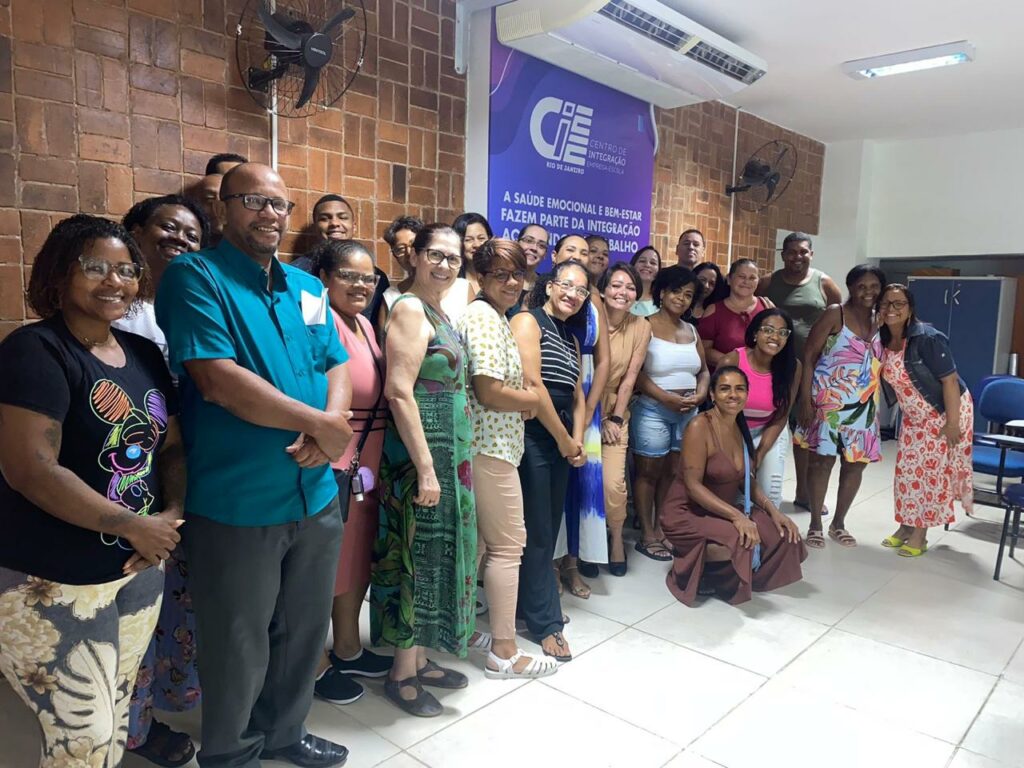
Já parou para pensar no superpoder que toda juventude ama ter consigo? Aquele apoio incondicional, o ombro amigo, a torcida vibrante nos bastidores… Sim, estou falando da família, como rede de apoio. No dia a dia do CIEE Rio, acompanhando adolescentes e jovens incríveis em seus primeiros passos no mundo do trabalho através dos Programas de Aprendizagem e Estágio, percebo, cada vez mais forte, o quanto a presença e o suporte familiar são nutrientes secreto do seu sucesso.
Imagine a jornada rumo à independência profissional como uma trilha nova e, por vezes, desafiadora. Ter sua rede de apoio por perto, mesmo que de jeitos diferentes, é como ter um mapa, uma bússola e uma rede de segurança para essa aventura. Mas como essa mágica acontece na prática?
Muitas vezes, a falta de informação pode ser como uma névoa densa nessa trilha. As famílias, especialmente aquelas que já enfrentam tantos desafios, podem se sentir inseguras sem conhecer os direitos dos seus filhos, o funcionamento dos programas ou os eventuais obstáculos que podem surgir no caminho. A pergunta que ecoa em nosso trabalho é simples, mas poderosa: como proteger quem a gente ama daquilo que a gente não conhece?
É aí que o Serviço Social, interage e intervém, buscando orientar essa jornada. Acreditamos que informação é poder, e um dos nossos maiores objetivos é garantir que as famílias se sintam seguras e confiantes para apoiar seus jovens talentos. Oferecemos desde acolhimento com escuta qualificada simples e diretas até oficinas dinâmicas, tudo para que um membro da rede de apoio de cada atendido, na diversidade de seus arranjos – enfim, quem cuida – entenda os direitos, os desafios e as oportunidades que a aprendizagem e o estágio oferecem.
Quando esta rede sociofamiliar está por dentro, ela se torna uma parceira incrível no desenvolvimento do jovem. Ajuda a entender os desafios do dia a dia, celebra as conquistas, oferece aquele apoio moral nos momentos de cansaço e, principalmente, compartilhar suas experiências importantes para a vida profissional e pessoal. Essa troca fortalece os laços, cria um ambiente de confiança e encoraja adolescentes e jovens a voarem seguros e mais alto.
E essa conexão poderosa entre rede familiar e desenvolvimento profissional não é um esforço isolado. Ela se conecta diretamente com os Objetivos de Desenvolvimento Sustentável (ODS) da Agenda 2030 da ONU. Ao fortalecer a função protetiva das famílias e garantir oportunidades de trabalho decente para os jovens, estamos contribuindo para:
- ODS 4: Educação de Qualidade: Uma família informada é mais possível que melhor apoie a trajetória educacional e profissional dos jovens, garantindo que eles aproveitem ao máximo as oportunidades de aprendizado.
- ODS 8: Trabalho Decente e Crescimento Econômico: Ao preparar jovens para o mundo do trabalho com o apoio familiar, facilitamos sua inserção em empregos de qualidade e contribuímos para o crescimento econômico inclusivo.
- ODS 16: Paz, Justiça e Instituições Eficazes: Uma juventude protegida e com seus direitos garantidos, com o apoio de famílias conscientes, contribui para uma juventudes mais justas e pacíficas. Isso é promover a equidade: Tratar o diferente com a diferença que ele precisar.
Acreditamos que investir na informação e no fortalecimento dos laços familiares é investir no futuro. É construir pontes sólidas entre a juventude e o mundo do trabalho, garantindo que essa jornada seja mais segura, promissora e cheia de realizações. Afinal, quando a família apoia, o talento jovem voa ainda mais longe!
Verônica Leal – Assistente Social de Especialista Social a em Trabalho com Família
Trabalho Social com Famílias: Nutriente Secreto do Sucesso