“He who saves one life, saves the whole world”
30/04/2024
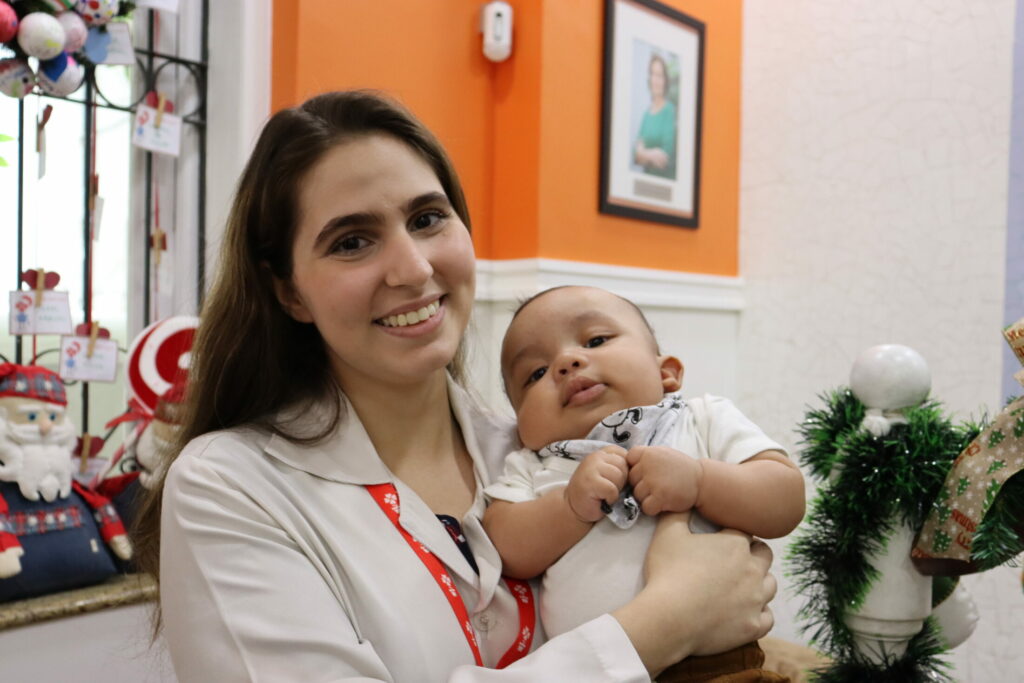
By switching, at the last minute, from Law to Medicine on the entrance exam registration sheet, teenager Isabela traced a destiny of great dedication and giving, crowned by the generosity and kindness learned from birth, values transmitted by her parents. “I found myself, it was a good choice. I was the first in my family to become a doctor”, says today Dr. Isabela Rangel, Medical Director of Pro Criança Cardiac, whom our blog honors on Cardiologist Day, August 14th.
Isabela is from Rio de Janeiro. She was born in Rio, near the Engenho Novo neighborhood, in the north of the city. She is the firstborn of Antônio Teixeira and Mercês Marques Teixeira, Portuguese immigrants who met in Brazil. The couple’s second daughter is named Ana Lúcia. “I had a very happy and very united childhood, a family with many cousins. Sundays were always expected, so everyone could meet up”, says the doctor.
Family ties remained strong. “I have a very close bond with my parents, we are always together. Just like my husband has with his parents. On weekends, we usually take turns and spend one day at my in-laws’ house, another with my parents. I also get along very well with my brothers-in-law. Furthermore, I currently see my father every day in the morning, because I am going to examine him and, of course, also play my role as a daughter, since he is 94 years old and has some health issues.
Her husband, Cláudio, is also a doctor. They met as soon as Isabela graduated. They have been together for 29 years and have three children, all adults, today: Juliana, 27 years old; Pedro, 22; and Gabriela, who turns 21 in November and chose her parents’ career.
And how did Dr. Isabela arrive at Pro Criança?
Working in a Neonatal ICU, she had her first contact with Dr. Rosa Célia. “She was going to give opinions in this ICU and I liked watching her do the exams, outline the course of action… That was when she invited me to join a group of intensive care doctors who would work in the post-operative period of children’s heart surgeries at the Pró-Cardiaco Hospital. To take on the new position, I left Casa de Saúde São José and Cardiobarra, where I worked.”
Then, a new invitation was made and accepted: to be part of the team at Dr. Rosa’s private practice. “I helped the children so that they would be as healthy as possible for heart surgery. I became enchanted by the area and, with a lot of support from Dr. Rosa, I decided to do a new specialization, this time, three years of Pediatric Cardiology at Hospital Pedro Ernesto, at the service of Dr. Luiz Alberto Christiani”, she recalls.
And he adds: “I participated in the creation and construction of Pro Criança Cardiac, since Dr. Rosa began dreaming of not only treating, but operating on, needy children whose families came to her office looking for help. I am very honored to have followed all of this.”
And ping-pong time has arrived! Let’s ask Dr. Isabela…
What is your favorite movie?
A film impacted me a lot. It’s “Schindler’s List” (Steven Spielberg/1993). It shows how, in the midst of so much cruelty, it is possible to find a lot of love. There is a quote in this film that also stuck with me, towards the end, when the main actor receives a ring on which is inscribed “He who saves a life, saves the whole world”. I believe in this, in the chain of good that is formed when a life is saved. The people around are infected by your gesture and commit to saving more lives.
I would also like to highlight one of my favorite books. It’s called “Night Train to Lisbon” (philosophical novel by Pascal Mercier published in 2004). It’s a shame the film doesn’t even come close to the book…
What food makes you sigh?
I love chocolate, it’s my weakness, but not just any chocolate. It’s one to taste.
In your free time do you like….
Read good books. I read a lot. That’s when I relax. Even going to the bookstore and smelling that book smell I like. I also love traveling and, for longer trips, the preparation is already a super program: studying customs, typical foods, cool places… I also really like taking short, last-minute trips, when we don’t work on the weekends. Going to the cinema is also a habit, but with the pandemic I never went again.
What person do you admire most?
My parents. I admire them so much for the courage they had to leave their country, still young, without knowing what they would find. They taught me the great values of life, from an early age they showed the importance of being kind, generous, perhaps even because of all the difficulties they had when they arrived here, a different culture, I don’t know if that’s why they always tried to help others. My sister and I saw and lived with their generosity. I hope one day I can be, for my children, what they are for me.
What dream of yours has already come true?
Discover Boston’s Children Hospital, in the United States, a reference in pediatric cardiology. I always wanted to go there, it was a huge accomplishment. The way the trip happened was also exciting, as I competed with other doctors and was approved for the visit.
What dream do you want to fulfill?
I want to be able to help Pro Criança become a reference in pediatric cardiology at a national and international level. This is a professional and personal dream, after all the institution has been in my life for so long… As a person, Isabela, I think I am already well fulfilled. With family, with work.
What do you like most about yourself?
My mother side.
What phrase inspires your life?
The Dalai Lama says: “Give those you love wings to fly, roots to return to, and reasons to stay.” I think this is the family basis. For those who are mothers, this is very important, knowing how to love without suffocating their children, making them grow within your love. It is necessary to give people the freedom to make their own choices and, at the same time, feel safe that they have a real home there. If you always do this with your friends and family you will always be surrounded by love.
Helping others is…
It’s essential.
Working at Pro Criança is…
Gratifying.
Last Tuesday, the 28th of May 2026, marked six months since Operation Contenção took place in the Penha and Alemão Complexes, in Rio de Janeiro’s North Zone. A total of 122 people were killed, including five police officers who took part in the operation. At the time, the state government declared that the operation had been carefully planned, that its results were significant, and that it represented progress in the fight against organized crime.
Six months later, it is time to examine Fogo Cruzado’s data before and after the operation to determine whether it actually produced any meaningful change in the area.
In the Penha neighborhood and surrounding areas, we recorded 35 shootings in the six months following the massacre. In the six months prior to the operation, there had been 37. Armed violence in the area did not decrease. We recorded 18 people shot in the post-operation period, compared to 14 beforehand: six deaths versus five, and twelve injured versus nine.
These numbers are not surprising to anyone who follows the historical data. We have documented this pattern repeatedly: a major police operation, a high death toll, workers caught in the crossfire, schools and essential services suspended, declarations of success — and then a return to normality, with the same geography of violence and the same groups controlling the territories. The Comando Vermelho was not dismantled in October. The territories it controls in the Penha Complex remain under its dominance. The main target named at the time, portrayed as public enemy number one, remains at large. And after him, new “public enemies number one” have already emerged.
This is not a problem with the execution of one specific operation. It is a problem with the model itself. Large-scale police operations generate an immediate human and financial cost, produce political imagery and rhetoric, and deliver results close to zero in terms of genuinely dismantling organized crime. Of the security agents who participated in the operation, only 504 used body cameras. After the release of 9,000 videos, the Federal Police estimate that analyzing the footage will take three years. While the 122 deaths from October have still not been fully investigated, public debate has already moved on to the next promise.
This pattern has deep roots. The three largest police massacres in the history of Rio de Janeiro state have all taken place in recent years: Jacarezinho in 2021, Vila Cruzeiro in 2022, and now Penha and Alemão. Each was presented at the time as a turning point. None altered the path of the organized crime. According to data from the Historical Map of Armed Groups, Comando Vermelho expanded its territorial control by 89.2% between 2007 and 2024 and today controls areas where 1.6 million people live in the Rio metropolitan region.
Operation Contenção was presented as an answer. Our data show that it was not: it was yet another operation carried out without strategic planning, verifiable objectives, and no mechanisms for post-operation evaluation.
In 2025, 39% of the shootings in Greater Rio occurred during police operations, resulting in 936 people shot and 460 killed. The policy of confrontation did not recover a single territory. Instead, made 61 stray-bullet victims and disrupted the routine of 565 schools.
Six months after the largest massacre in the country’s history, the question that remains is simple: what has changed in the public security policy of the state of Rio de Janeiro? What goals were established? Which indicators are being monitored? What accountability has there been for the 122 deaths?
Carlos Nhanga, Regional Coordinator for Fogo Cruzado in Rio de Janeiro
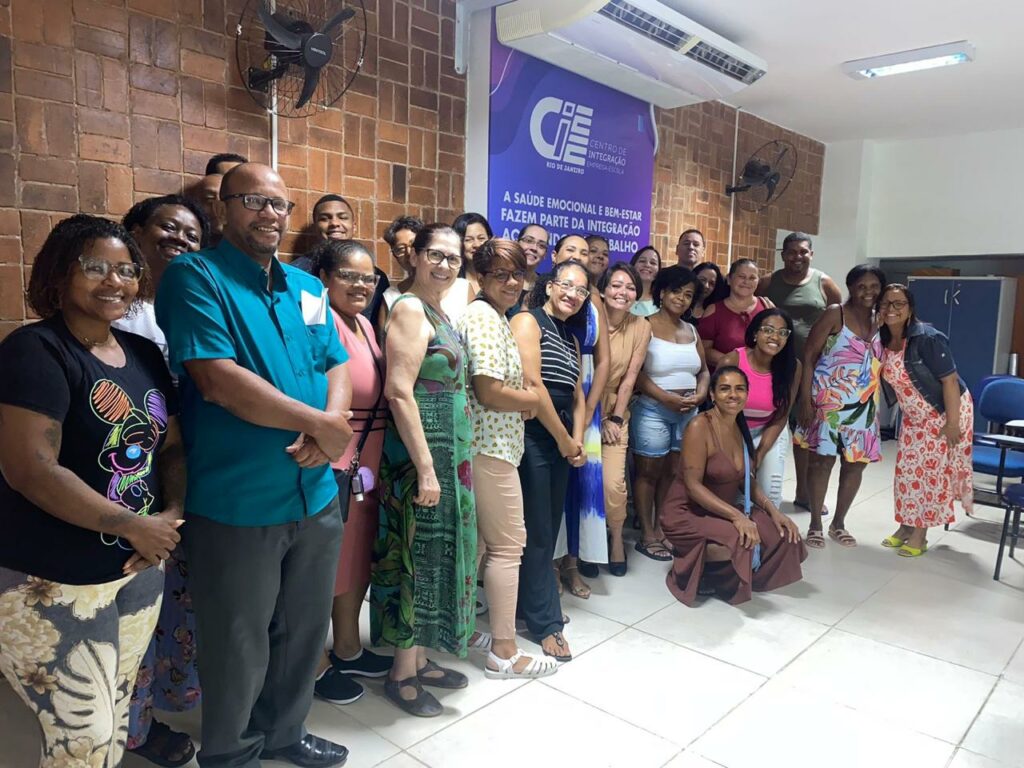
Já parou para pensar no superpoder que toda juventude ama ter consigo? Aquele apoio incondicional, o ombro amigo, a torcida vibrante nos bastidores… Sim, estou falando da família, como rede de apoio. No dia a dia do CIEE Rio, acompanhando adolescentes e jovens incríveis em seus primeiros passos no mundo do trabalho através dos Programas de Aprendizagem e Estágio, percebo, cada vez mais forte, o quanto a presença e o suporte familiar são nutrientes secreto do seu sucesso.
Imagine a jornada rumo à independência profissional como uma trilha nova e, por vezes, desafiadora. Ter sua rede de apoio por perto, mesmo que de jeitos diferentes, é como ter um mapa, uma bússola e uma rede de segurança para essa aventura. Mas como essa mágica acontece na prática?
Muitas vezes, a falta de informação pode ser como uma névoa densa nessa trilha. As famílias, especialmente aquelas que já enfrentam tantos desafios, podem se sentir inseguras sem conhecer os direitos dos seus filhos, o funcionamento dos programas ou os eventuais obstáculos que podem surgir no caminho. A pergunta que ecoa em nosso trabalho é simples, mas poderosa: como proteger quem a gente ama daquilo que a gente não conhece?
É aí que o Serviço Social, interage e intervém, buscando orientar essa jornada. Acreditamos que informação é poder, e um dos nossos maiores objetivos é garantir que as famílias se sintam seguras e confiantes para apoiar seus jovens talentos. Oferecemos desde acolhimento com escuta qualificada simples e diretas até oficinas dinâmicas, tudo para que um membro da rede de apoio de cada atendido, na diversidade de seus arranjos – enfim, quem cuida – entenda os direitos, os desafios e as oportunidades que a aprendizagem e o estágio oferecem.
Quando esta rede sociofamiliar está por dentro, ela se torna uma parceira incrível no desenvolvimento do jovem. Ajuda a entender os desafios do dia a dia, celebra as conquistas, oferece aquele apoio moral nos momentos de cansaço e, principalmente, compartilhar suas experiências importantes para a vida profissional e pessoal. Essa troca fortalece os laços, cria um ambiente de confiança e encoraja adolescentes e jovens a voarem seguros e mais alto.
E essa conexão poderosa entre rede familiar e desenvolvimento profissional não é um esforço isolado. Ela se conecta diretamente com os Objetivos de Desenvolvimento Sustentável (ODS) da Agenda 2030 da ONU. Ao fortalecer a função protetiva das famílias e garantir oportunidades de trabalho decente para os jovens, estamos contribuindo para:
Acreditamos que investir na informação e no fortalecimento dos laços familiares é investir no futuro. É construir pontes sólidas entre a juventude e o mundo do trabalho, garantindo que essa jornada seja mais segura, promissora e cheia de realizações. Afinal, quando a família apoia, o talento jovem voa ainda mais longe!
Verônica Leal – Assistente Social de Especialista Social a em Trabalho com Família